
Open eyes, Open hearts and open minds:
Alumni carry the spirit of UWCSEA within and beyond
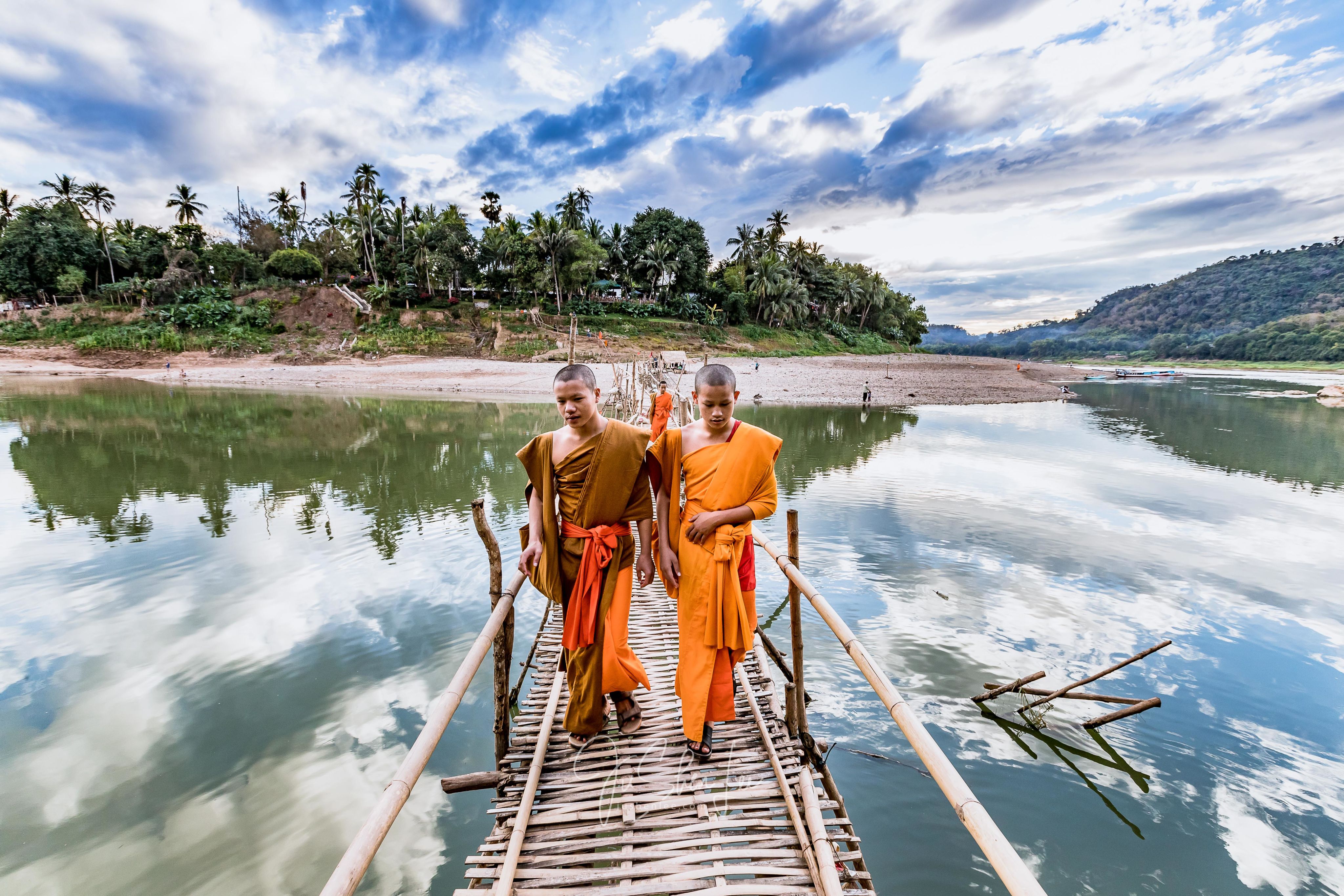

Ju Shen and Jeevan are among our many alumni who continue to espouse the mission and values of UWCSEA in their lives, in their communities and beyond into the world. Here Ju Shen’s stunning photos bring to life some of this alumni couple’s reflections from several of their photo expeditions.

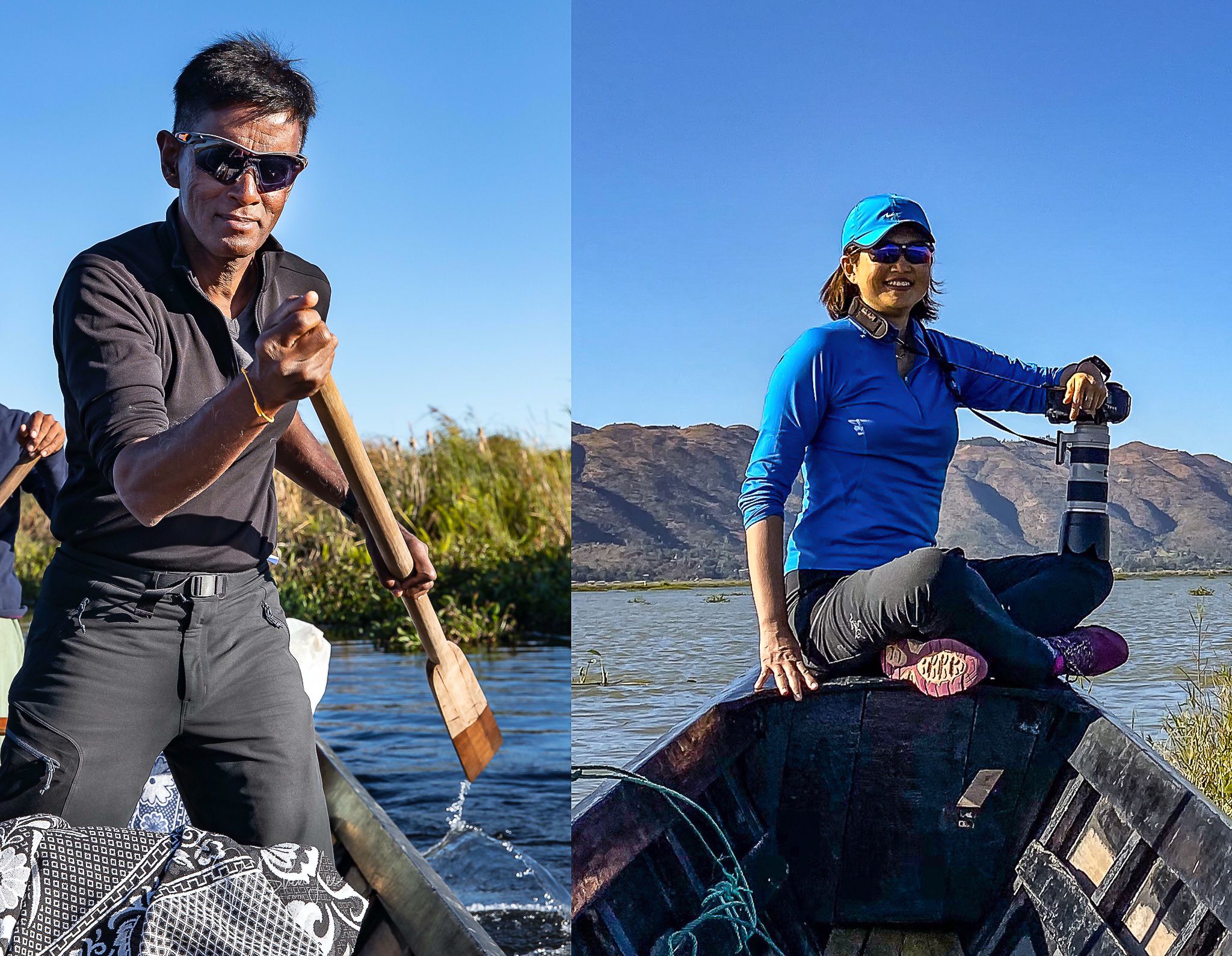
UWCSEA taught us to build bridges to different people from different cultures living in different worlds. Our UWCSEA experiences showed us that with open eyes, open hearts, and open minds, we would learn from others, care for others, and share with others. We have continued to gather immense benefit from our UWCSEA lessons and experiences.
Driven by Ju Shen’s passion for ‘Real.Life.Photos’, we have continued to leverage these invaluable lessons and experiences as we have traveled on our annual, month long photo-expeditions: Bhutan (2013,2014), Cambodia (2015), Laos (2016, 2017, 2018), and Myanmar (2019). We have come to appreciate that we did not graduate from UWCSEA but, instead, we graduated with the spirit of UWCSEA as a part of us.
Here are some of our experiences which tell the story of this profound influence…
Phoumieng (Laos)

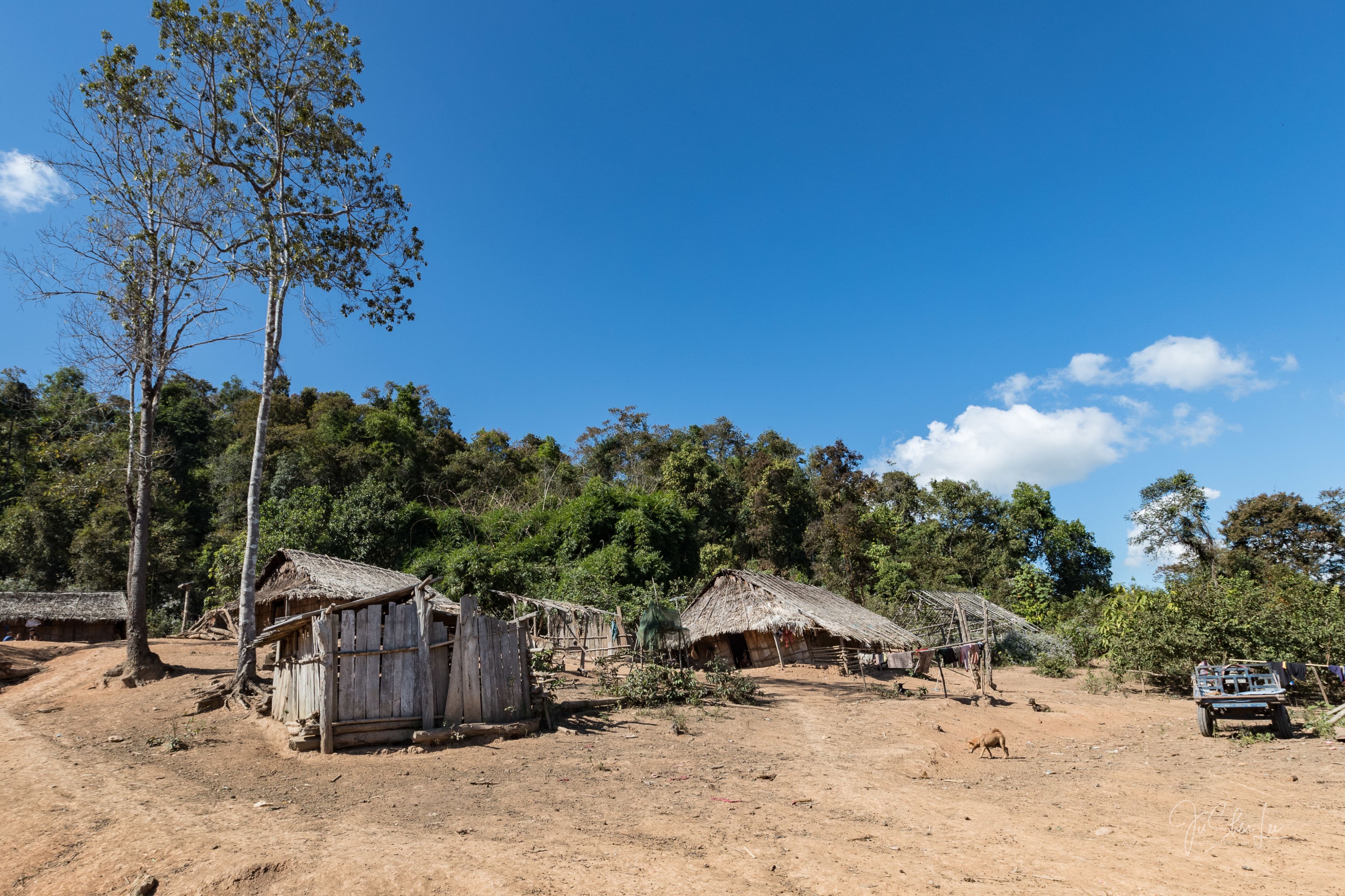
Our friend, Bounchan Her, invited us to attend a traditional Hmong festival in Phoumieng, his ancestral village in the Laotian Highlands west of Luang Prabang. We set off at dawn in a van packed with his family, and supplies for his parents. After two bone-jarring hours driving over unpaved and pot-holed roads, we transferred to an open tractor for one bone-shattering hour on hard laterite tracks that climbed high into the hills.
The Hmong are an ethnically and culturally distinct group, who live in small remote villages in the highlands. They farm hill rice and cash crops, and rear cattle, buffaloes, and pigs for consumption and sale. They have a unique language and are animists, unlike there rest of Laos, which is predominantly Buddhist.
As we had hired the tractor for our day-trip, the driver was pleasantly surprised when we offered a lift to everyone who was trudging up the hills with their heavy loads. Very soon the tractor had become a community bus, with the precious cargo placed carefully in the centre, whilst the passengers hung off the side. It was a happy mob, laughing and smiling, and exchanging news and gossip, as we dropped some off and picked others up along the way!
The noisy tractor and even noisier passengers arrived in Phoumieng just after the villagers had slaughtered the sacrificial pig for the feast. Bounchan Her’s father, who is the village headman, proudly showed us around the village, the farms, and their schoolhouse. As with remote villages the world over, they have to do everything themselves, from digging their wells to building their homes, and their total self-reliance is incredible!
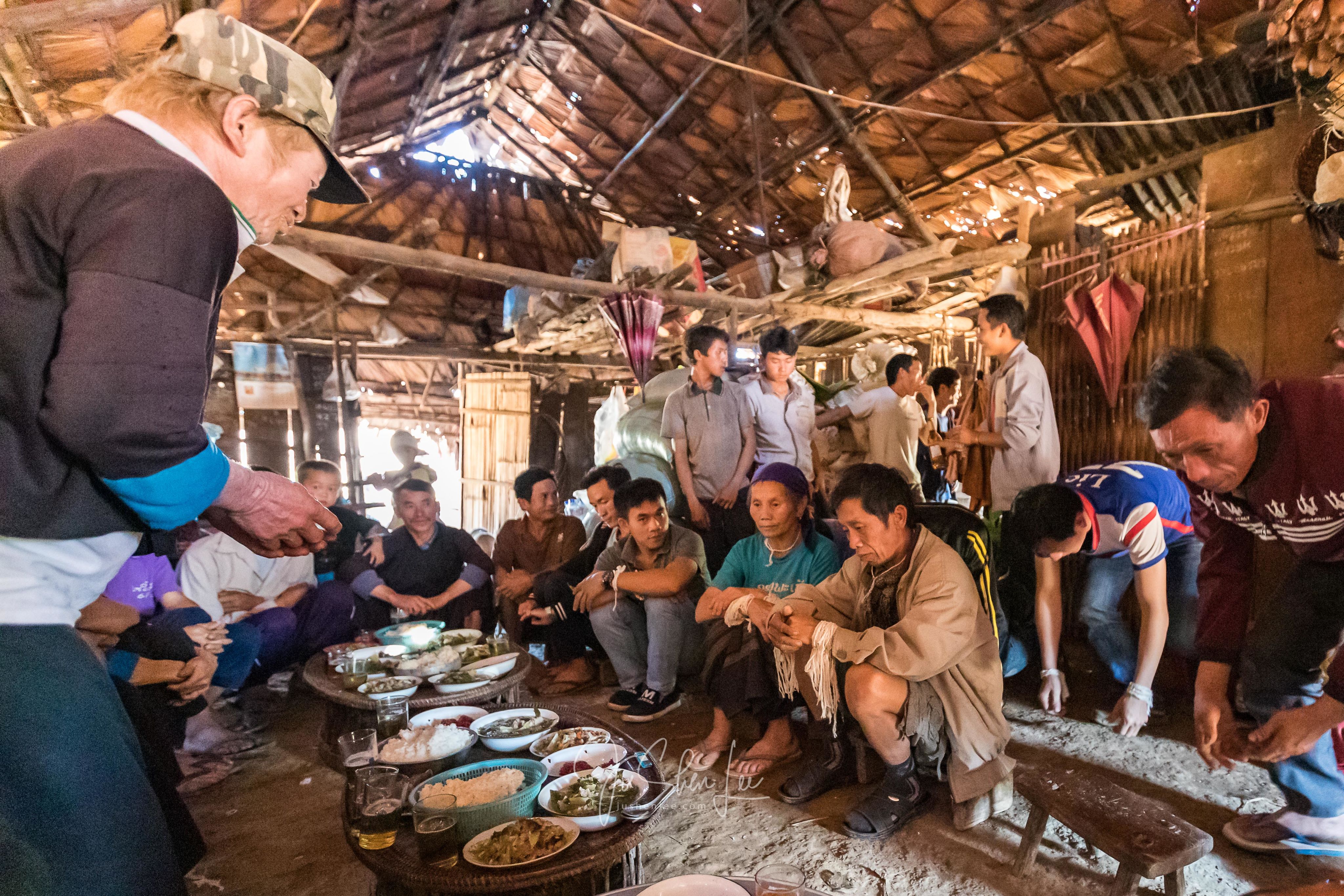
A shaman conducted the traditional animist rituals in the headman’s home. We were asked to be part of the inner circle, which passed around religious artifacts and food items provided by the shaman. With an audience closely watching us, we wholeheartedly participated in the solemn rituals and mimicked, sometimes imprecisely, what the others did with the various items. The respect we showed as we carefully conducted our roles in the ritual quickly dissolved the cultural barriers.
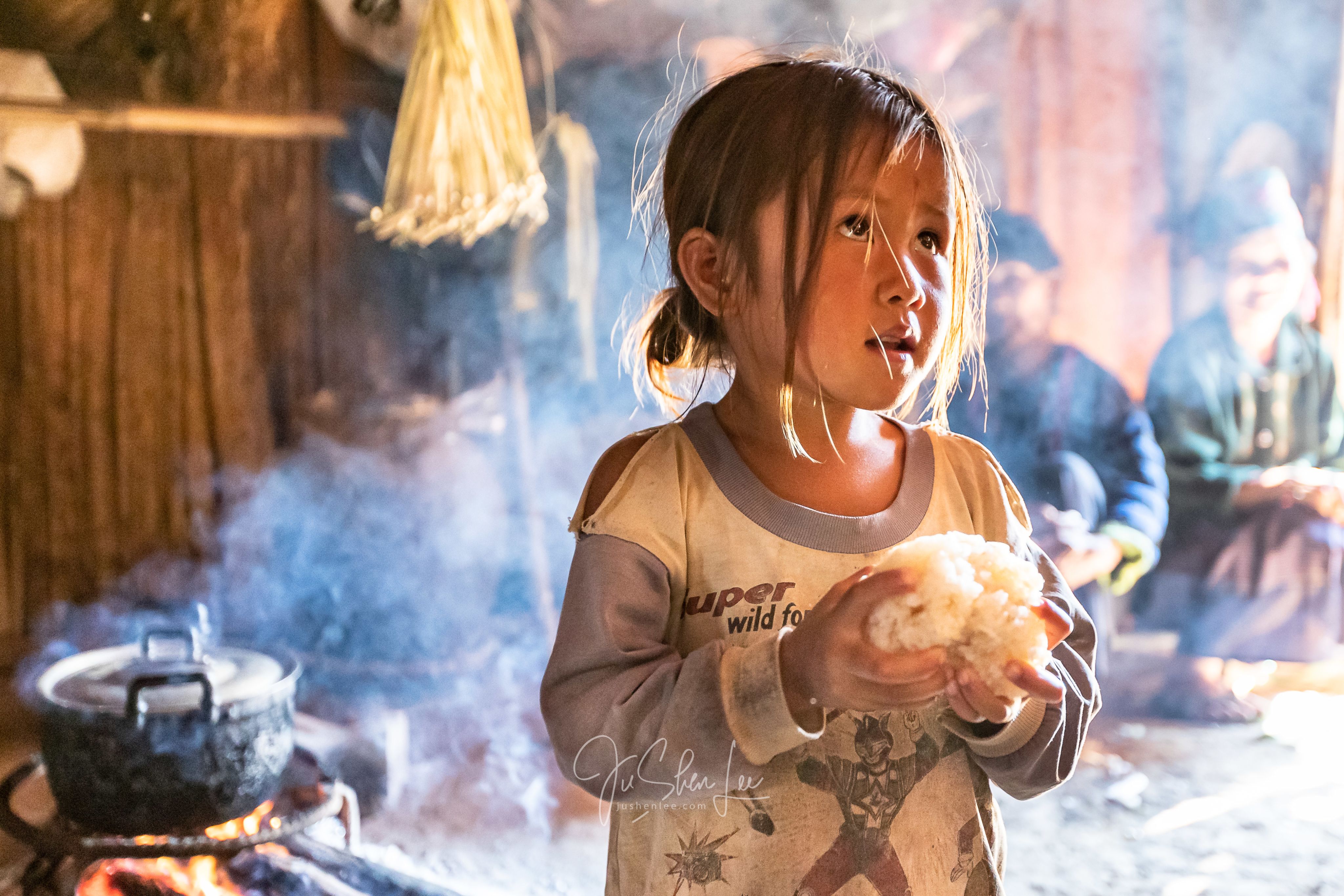
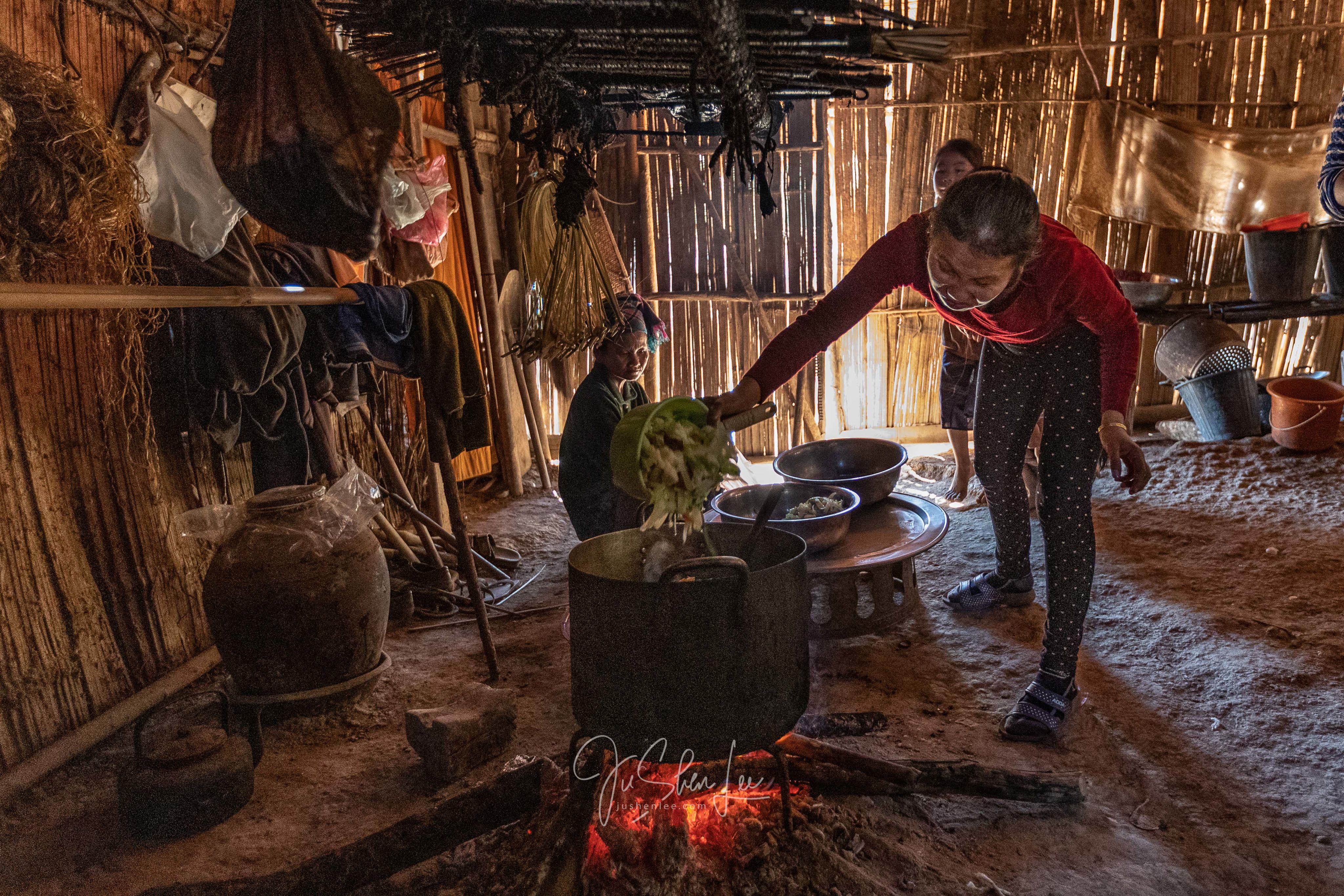
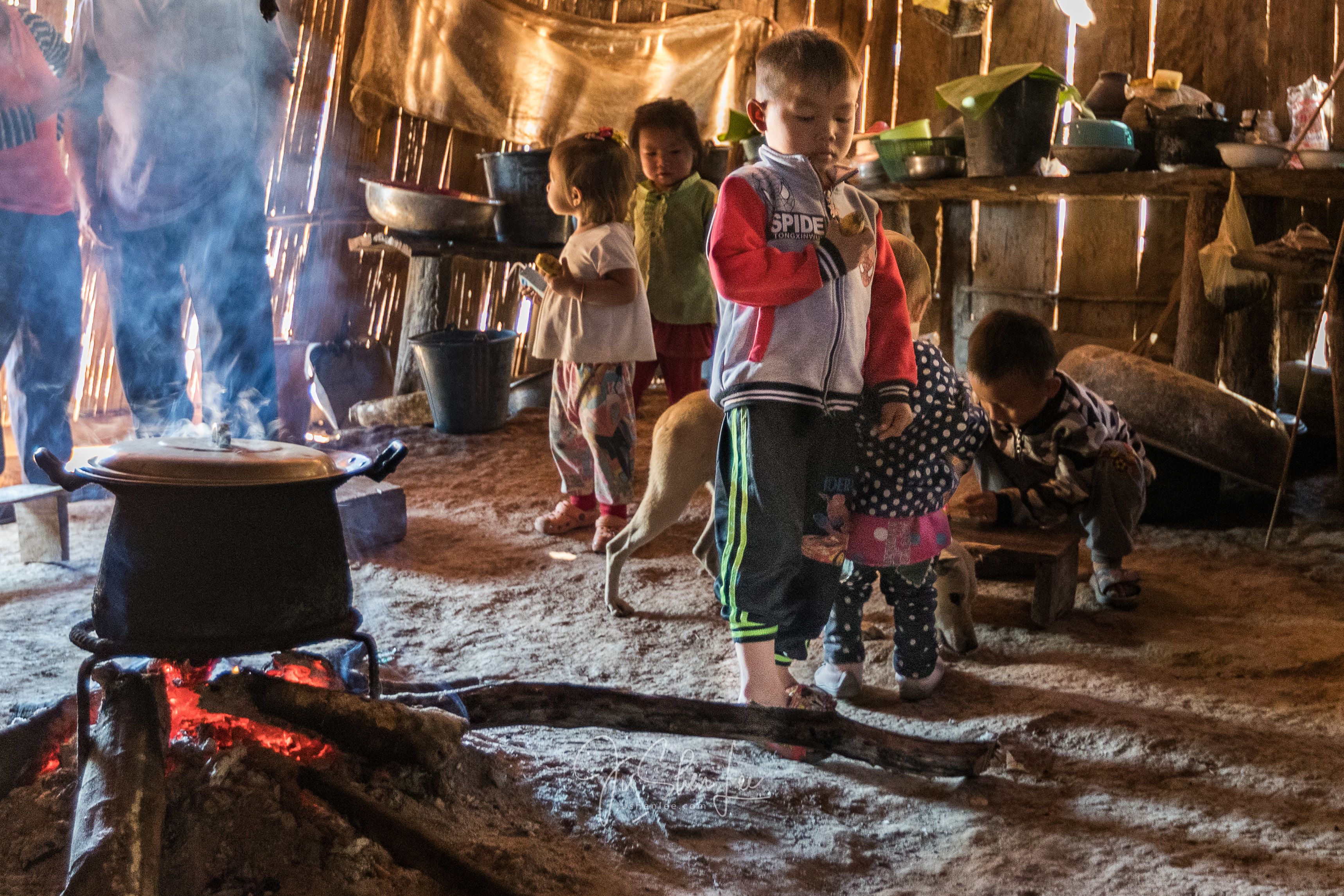
Meanwhile, the various parts of the sacrificed pig were being stewed and roasted over large open fires. After the rituals, the village feast began in earnest. As the adults constantly filled our bowls with pork and rice, the children ran around dangerously close to the open fires, and the village dogs waited patiently for their bounty of bones!
Postscript: Following this trip to his village, Bounchan Her sought our advice on how to manage his resources and prioritize his various farming projects. To this day, we continue to advise him by asking him the right questions in the right way at the right times. We returned to Luang Prabang for Ju Shen to take more ‘Real.Life.Photos’ for her photo-book ‘Luang Prabang – Life & Prayer’, which was published in 2018.


Nyaung Won (Myanmar)

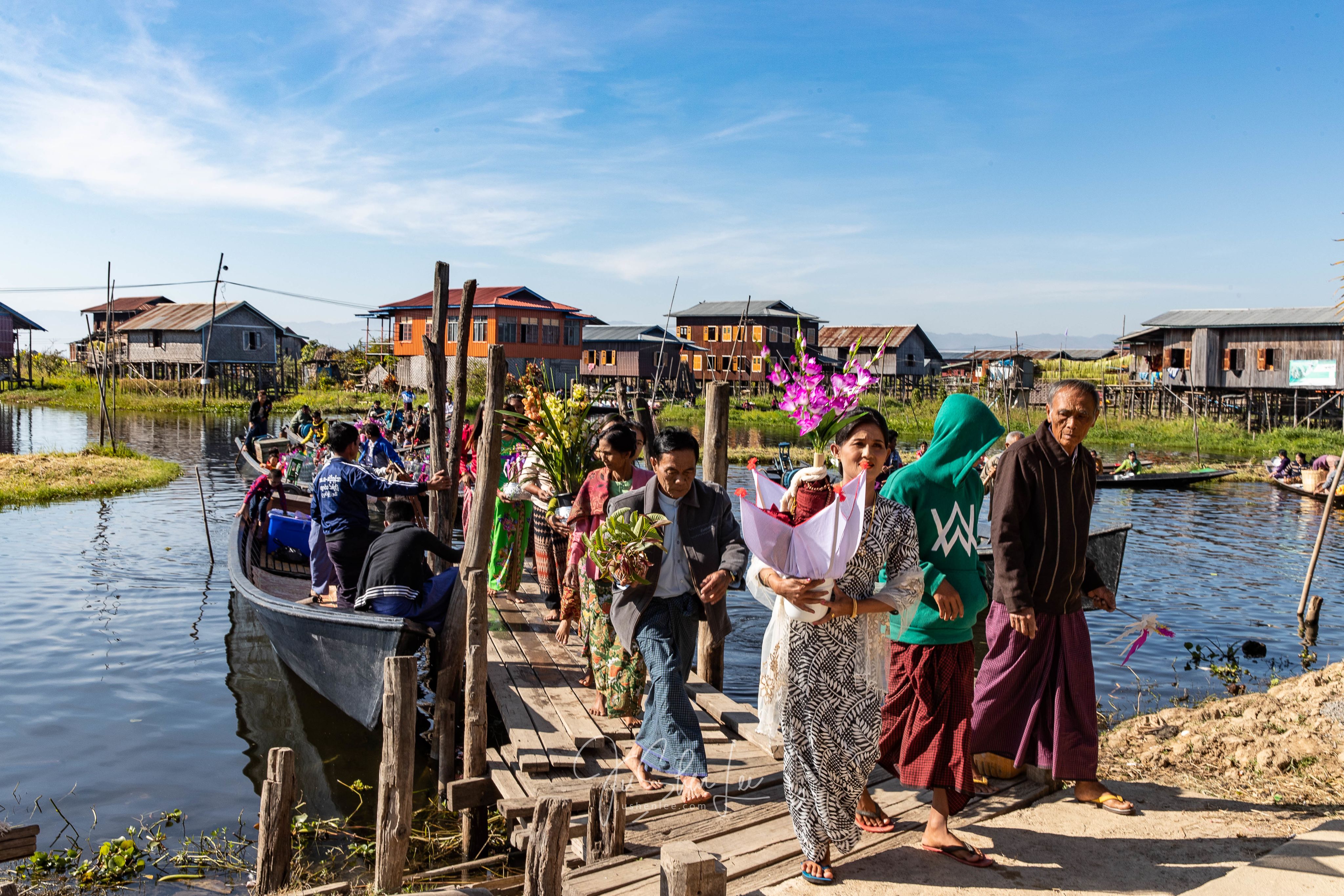
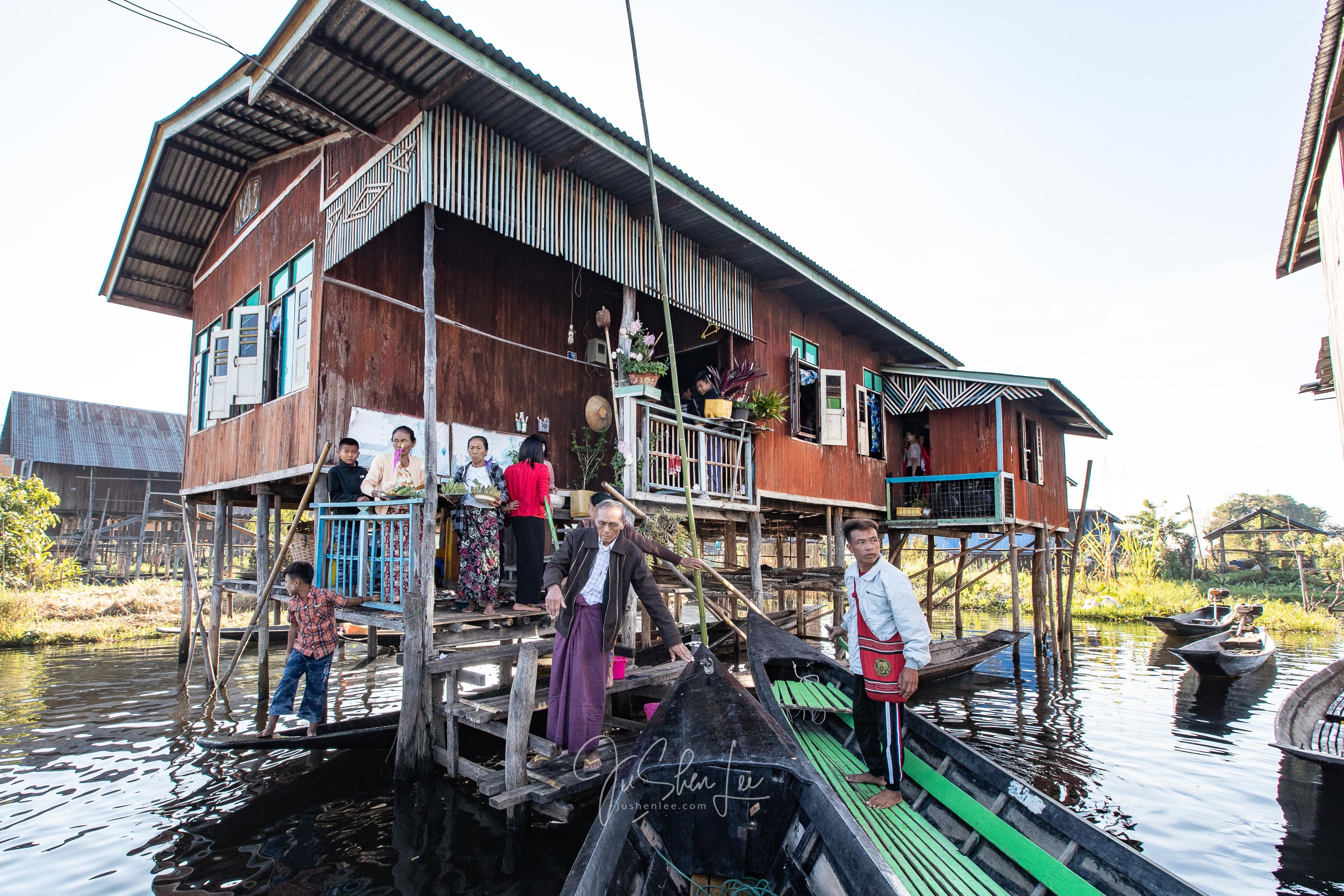
We were slowly rowing along the waterways as Ju Shen took photos of Nyaung Won, one of the many Intha villages built on stilts over Inle Lake in eastern Myanmar. Three of us rowed in response to Ju Shen’s frequently changing instructions: Leh Po, our boatman who did not speak English; Naing Moe, our English-speaking guide; and Jeevan who never listened to Ju Shen’s instructions. Families watched in amusement from their windows as our boat zigzagged along the waterways, trying to find the perfect spot, the perfect angle, and the perfect light for Ju Shen’s photos. It was clearly exhausting and one Intha family kindly invited us to their home for tea!
The Intha are the indigenous people of Inle Lake, which was declared a UNESCO World Network of Biosphere Reserves site in 2015. They are fishermen and farmers who have developed ingenious fishing techniques and floating farms. The Intha also have a variety of cottage industries, including lotus-silk weaving, textile dyeing, and manufacturing snacks and confectionery. They have a distinct language and are predominantly Buddhist, like the rest of Myanmar.
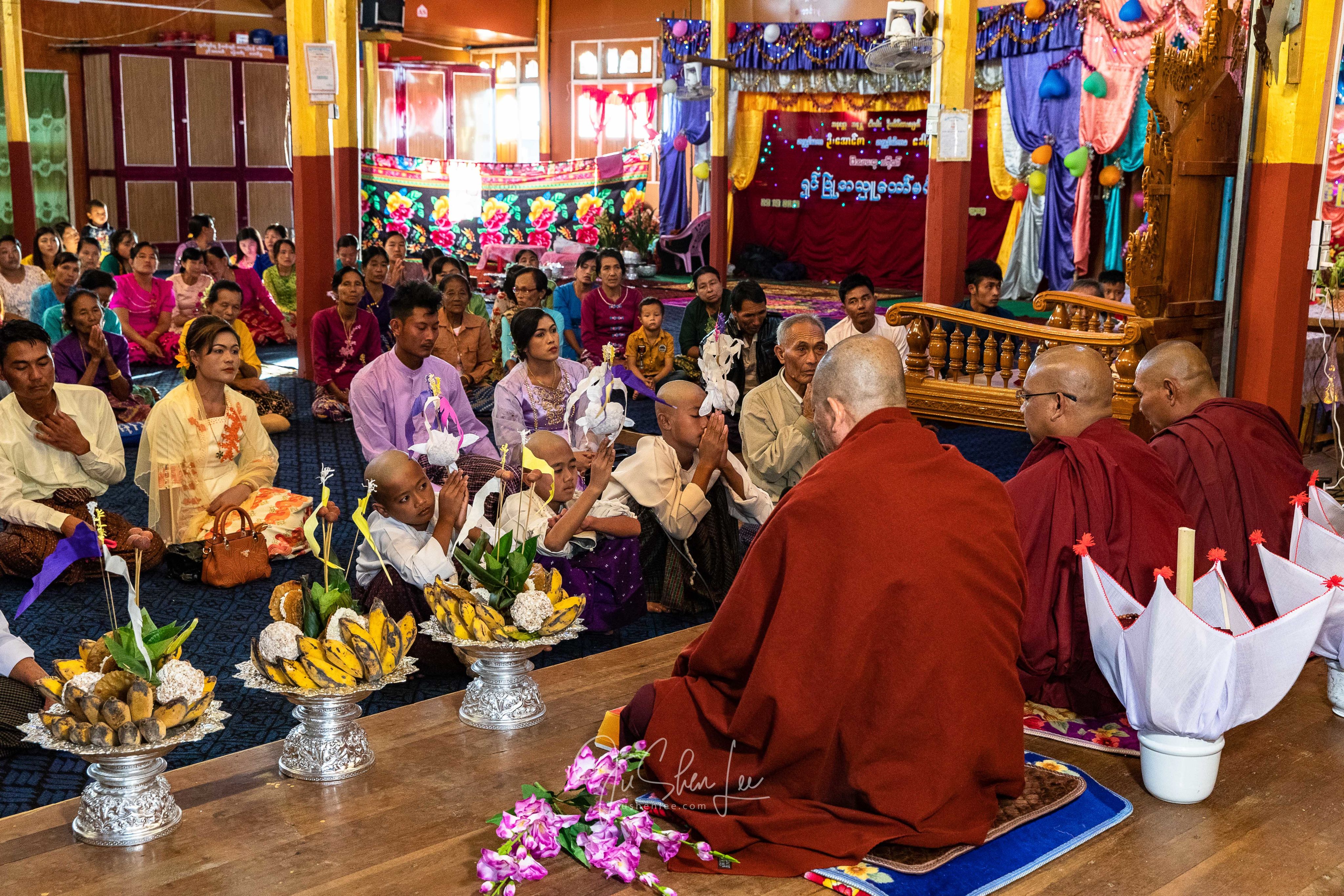
As the tea flowed and biscuits were devoured, their curiosity turned to comfort and they invited us to participate in their young son’s Buddhist novitiation ceremony. This coming-of-age ceremony for young Buddhist boys prepares them to enter the monastery as novice monks for a week. It is a lavish religious ceremony and social occasion, and our hosts had joined two other families to share the costs of the three-day event.
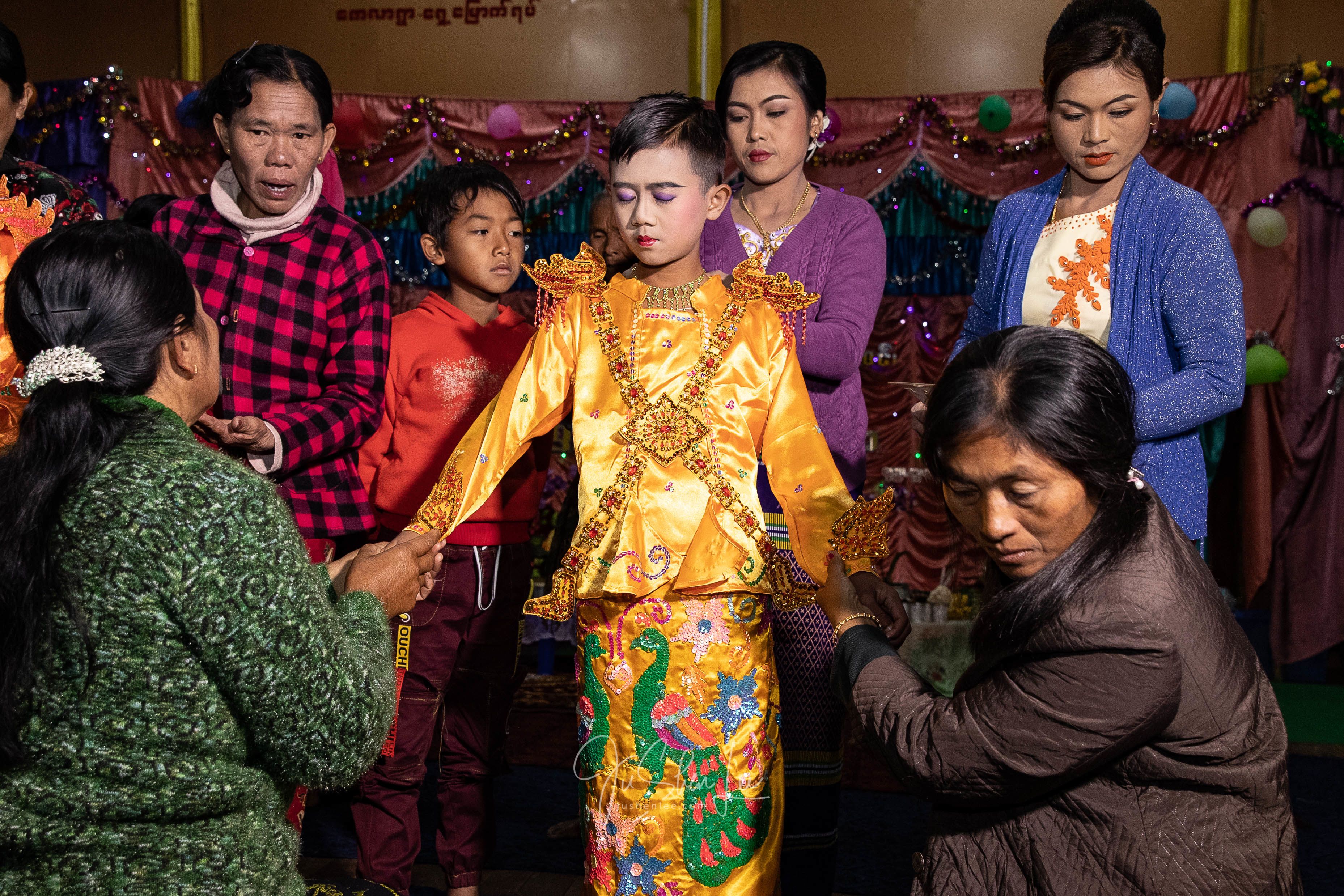
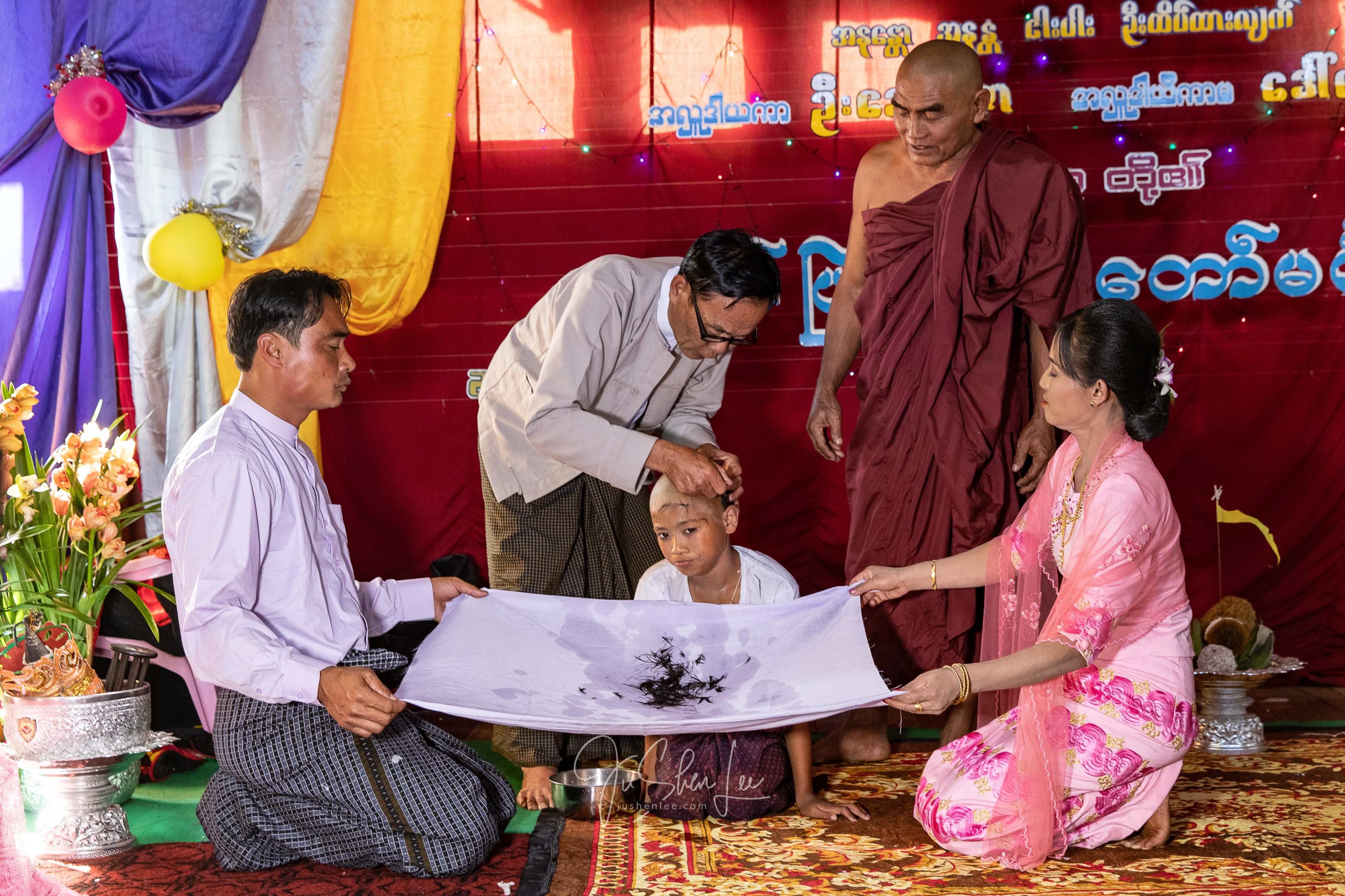
For three long days, starting at 4am in the morning and continuing until the early evening, we joined the three families as their young sons performed multiple rituals on their path to becoming novice monks. These included dressing like princes, depicting the princely life that Buddha had relinquished, having their heads shaved, and reciting Buddhist prayers from memory to the abbot of the monastery.
Many villagers joined in the prayer sessions whilst others cooked vast amounts of food for the gathering. Although it was calm inside the temple, it was hectic outside as boats arrived laden with food, visitors from other villages, and monks from other monasteries. We became a part of the fabric of Nyaung Won’s community for three wonderful days; fed, watered, and cared for like everyone else!
Postscript: Since this expedition to Inle Lake, we have been advising Naing Moe on simple methods to efficiently manage, economically develop, and effectively market his travel guide business. Ju Shen taught him to take well-composed photos on his mobile phone for upload onto the various social-media marketing platforms. With our support, Naing Moe is supplementing his income by teaching English to high school and university students, and white-collar workers. Ju Shen’s ‘Real.Life.Photos’ from this expedition are presented in ‘Inle Lake – Ingenious Lives’, which was published in 2020.


Luang Prabang (Laos)

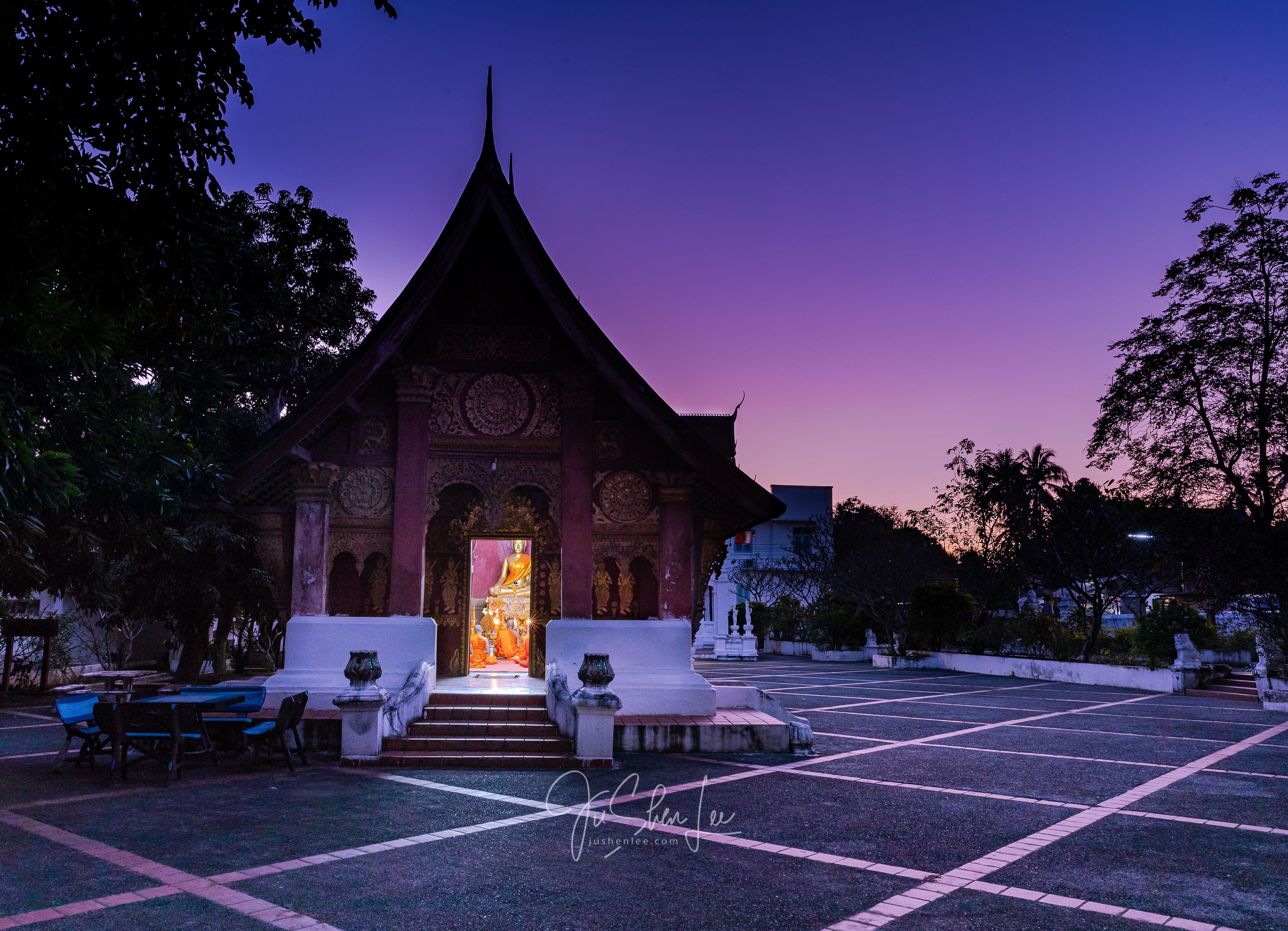
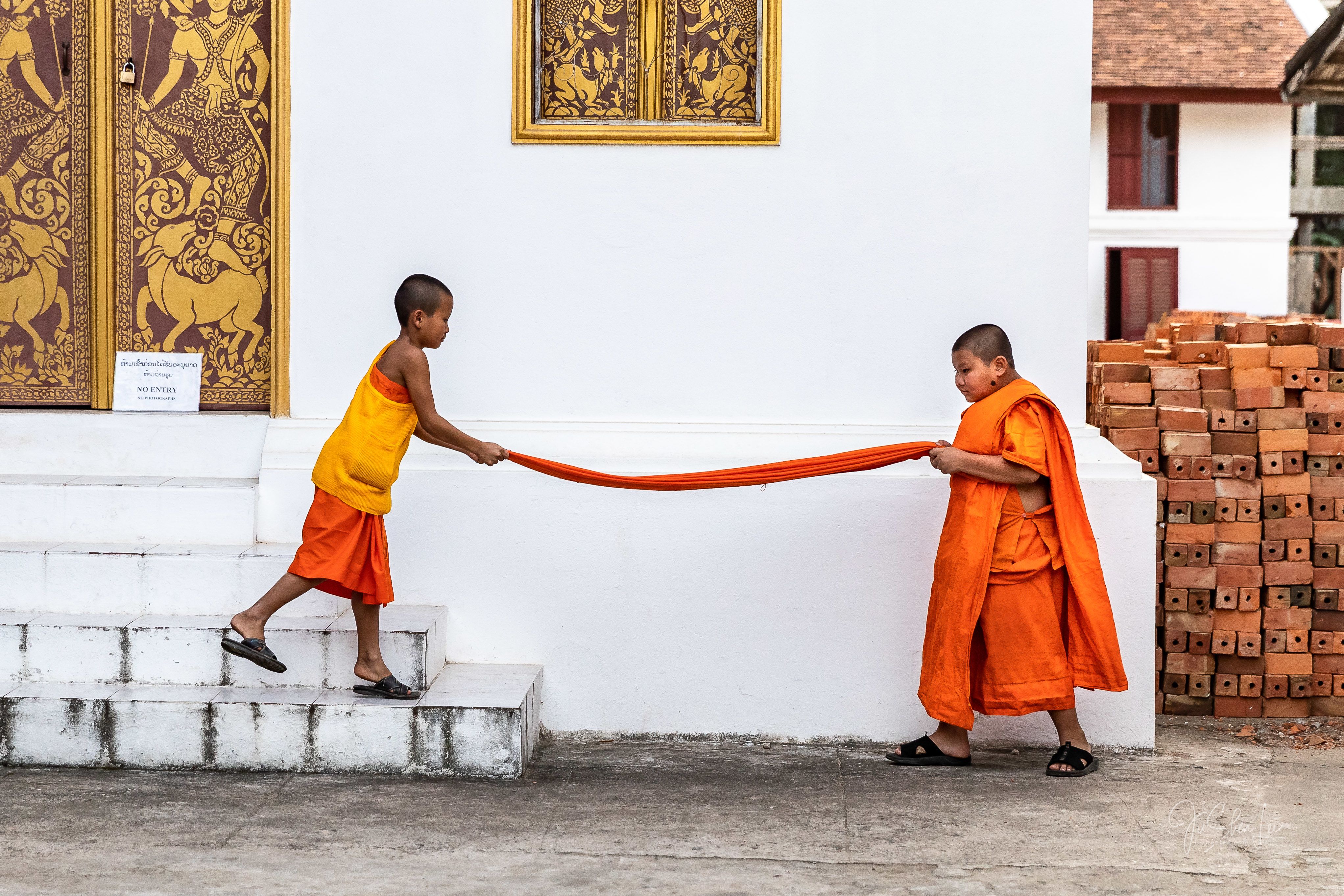
Ju Shen was photographing a regional Buddhist festival at Wat Xiengthong that was attended by hundreds of monks, from the most senior elderly abbots to the most junior young novices. We noticed a group of a dozen young monks, who were struggling to take a group photo with a small mobile phone held at arm’s length. This was clearly proving to be an impossible challenge and so Ju Shen stepped in with her camera to take their group photos. Later that day, after processing the photos, Ju Shen sent them to the young group leader via Facebook!
Luang Prabang is nestled in the verdant hills and mountains of the Laotian Highlands in northern Laos. The town is centred on a peninsula at the confluence of the famous Nam Kong (Mekong) River and its tributary, the Nam Khan River. It was a former royal capital and was declared a UNESCO World Heritage Site in 1995. It is also the historical centre and spiritual heart of Laotian Buddhism. Indeed, the Heritage Site alone is home to over twenty active temples.
When the hotel staff learnt whom we had befriended, they were astounded. The young group leader was none other than Satou Thongkhao, the esteemed abbot of Wat Nong Sikhounmuang, who is widely regarded as a leading authority on Laotian Buddhism. One would never have known otherwise that this gentle, unassuming, and unpretentious young man was so highly regarded in Luang Prabang’s lay and religious circles!
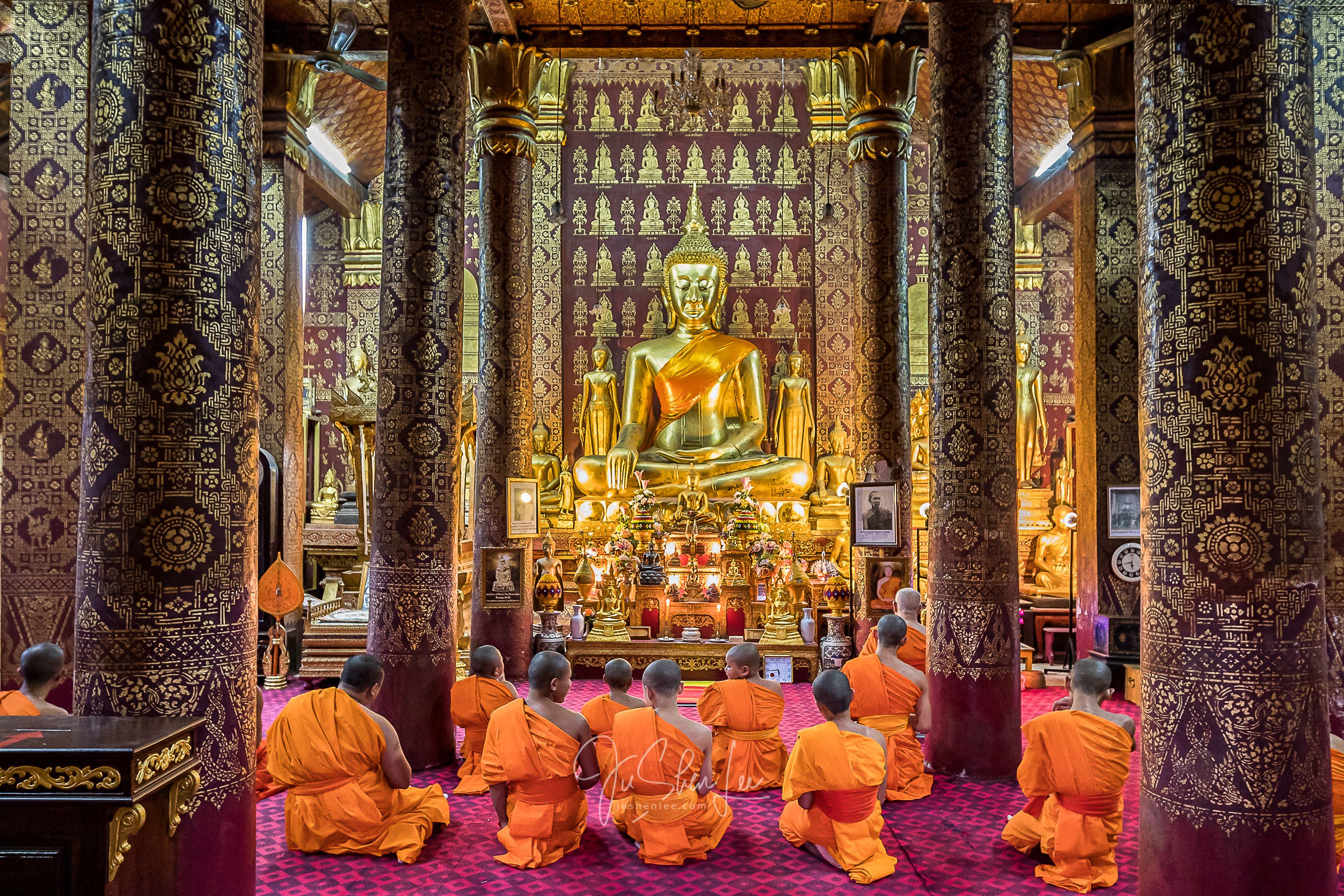
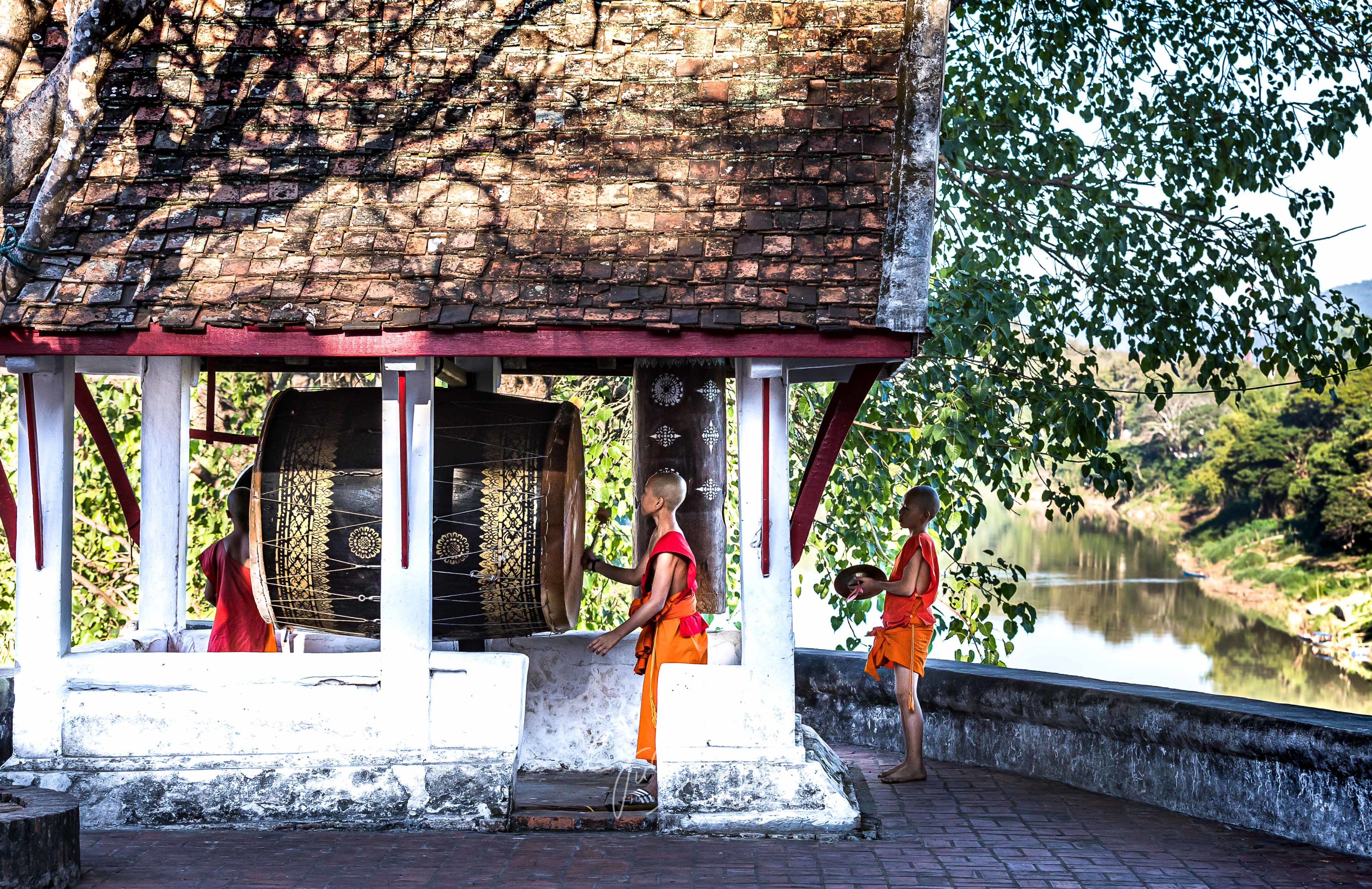
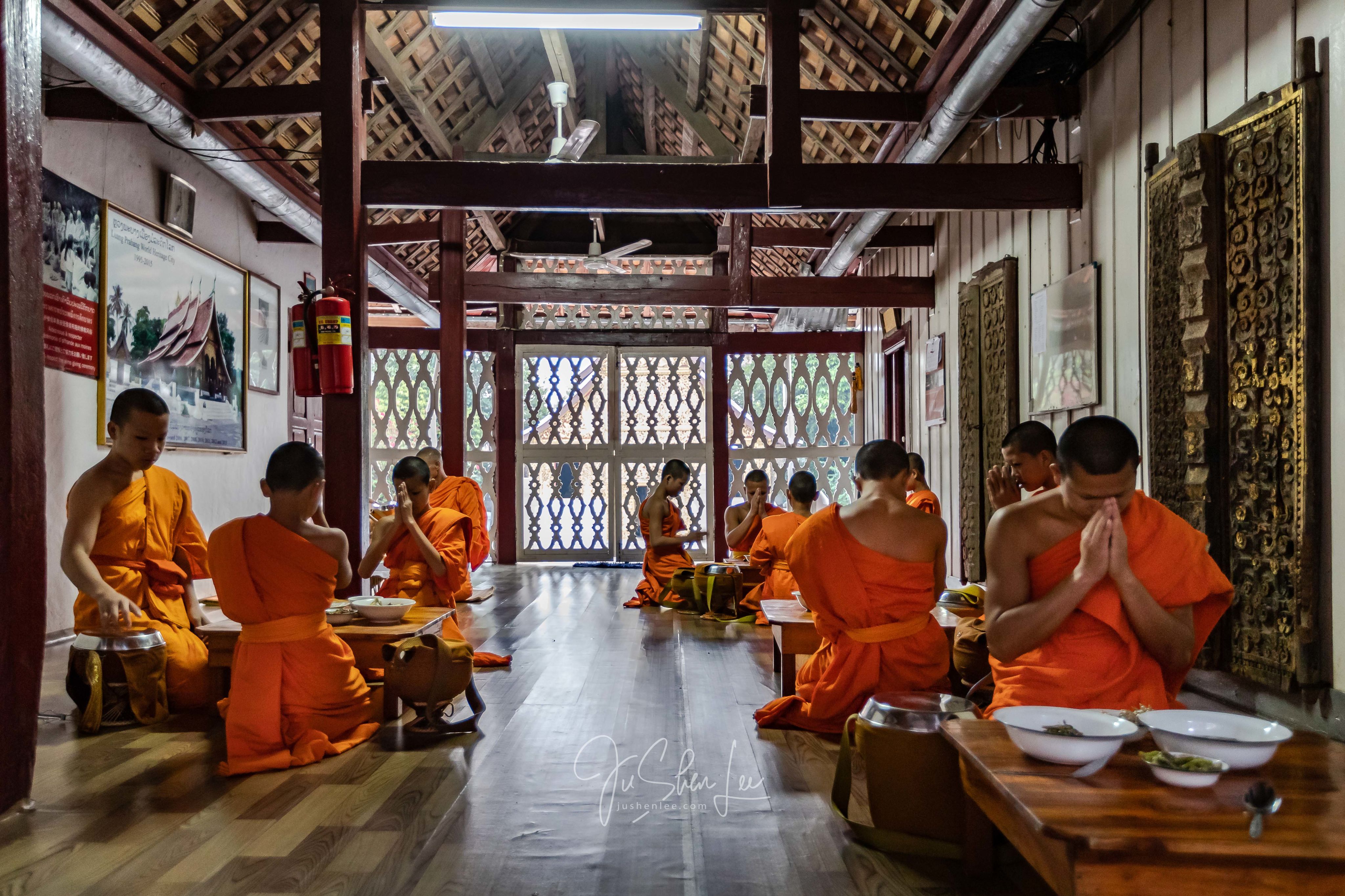
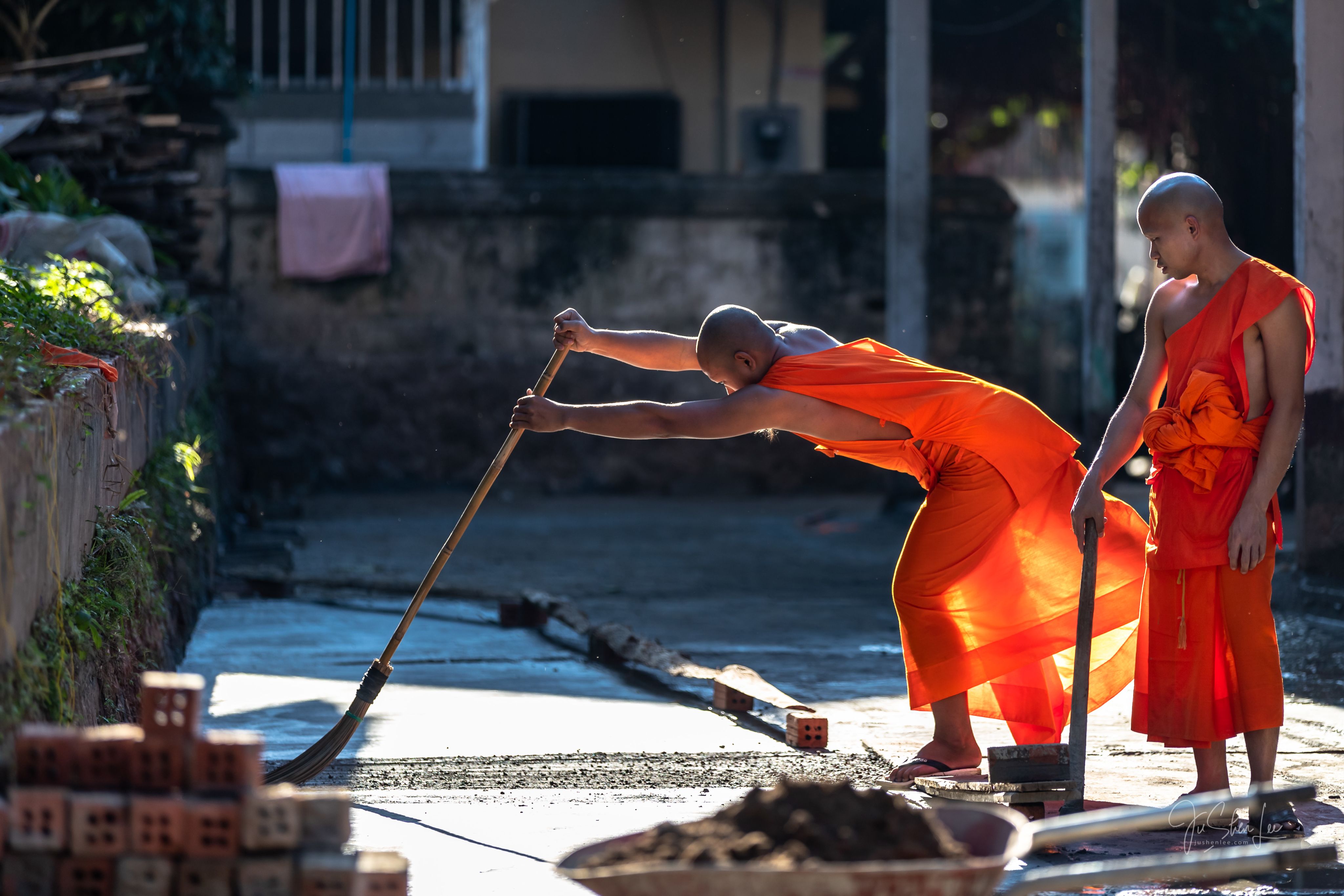
The abbots of Luang Prabang’s Buddhist temples have to manage and balance the spiritual and secular lives of the monks, who live, work, study, and pray in these temples. Their spiritual life, enshrined in their serene religious ceremonies and silent alms taking, is readily seen. However, their secular life, centred around their strenuous chores, demanding school studies, and well-earned recreation, is rarely seen.
As the trust grew, Satou Thongkhao introduced us to his cohort of young abbots in Luang Prabang. This cohort, all of whom speak English, is being groomed to revitalize the reach of Laotian Buddhism. They are often seen explaining the tenets of Buddhism, and the iconography and artifacts in their temples, to the more discerning foreign visitors.
We visited their temples regularly, often helping the young novice monks with their English, mathematics, and science homework. We were soon considered as members of their lay community, and were invited to attend their public and private, religious and social events. They also invited us to photograph their recreational, and building maintenance and construction activities. Occasionally, we were asked to translate for them, whenever the foreign visitors did not speak English. We became such a feature that the youngest novice monks would break ranks during the silent alms taking to greet us. The abbots would nod appreciatively as we shooed the young novices back into the line!
Postscript: Our friendship with Satou Thongkhao continues to this day as he shares his plans for his novice monks, his temple, and his lay community. Inspired by him and encouraged by the access he had provided, we returned to Luang Prabang and Ju Shen photographed the rarely seen daily lives of the monks there. The ‘Real.Life.Photos’ from this expedition are presented in her photo-book, ‘Luang Prabang – The Monks’, which was published in 2019.



Merak (Bhutan)
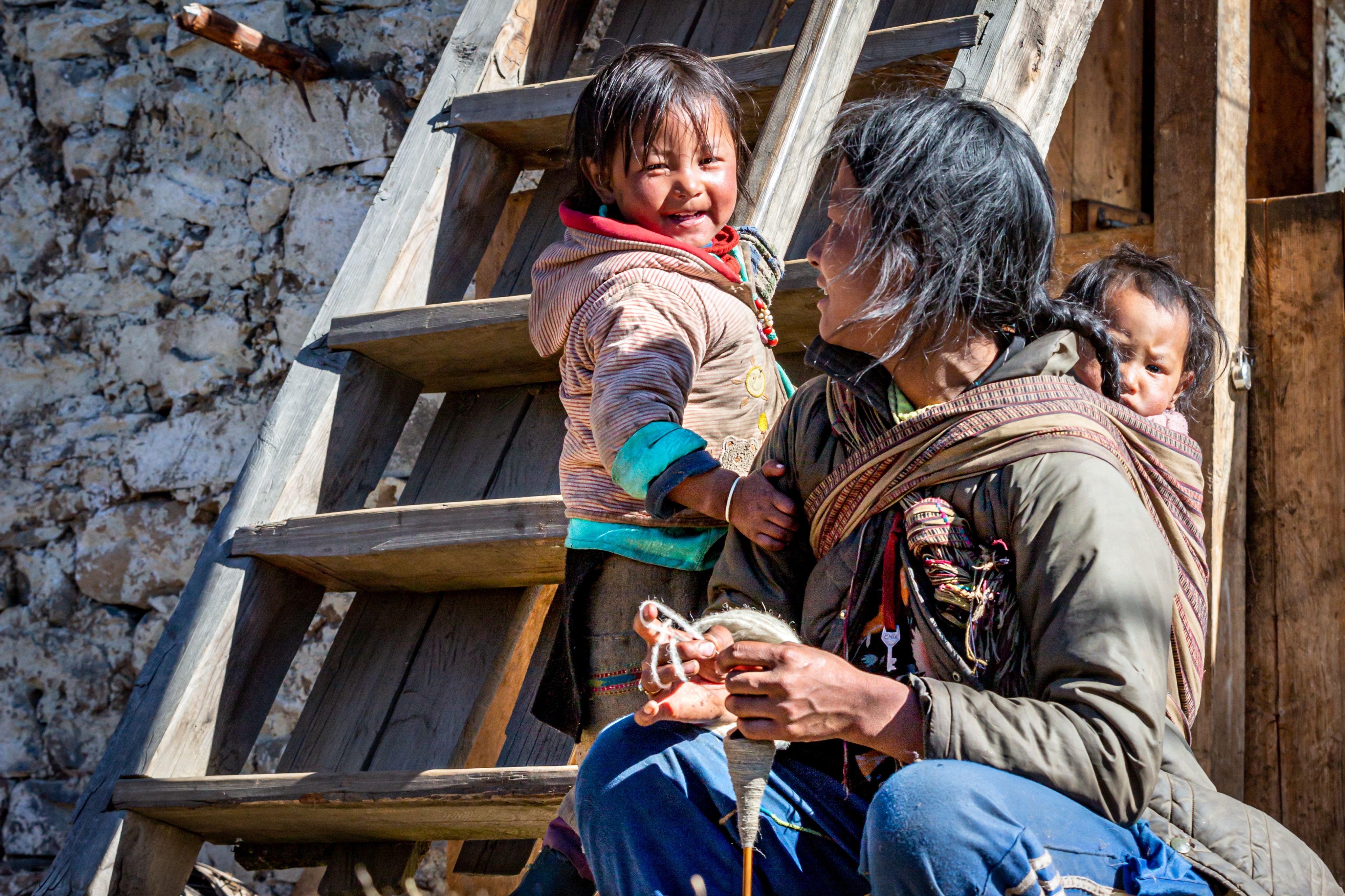
We were marooned in Merak (3,520m), a Brokpa village nestled in the Himalayan range in remote eastern Bhutan. During our trek through the Sakteng Wildlife Sanctuary, we learnt that the Nakchungla pass (4,153m) and the Labtsekha pass (3,300m) were all but closed by heavy snowfall. Our guide, Kesang Tshering, decided that it would be dangerous to continue on to our destination, Sakteng (2,950m).
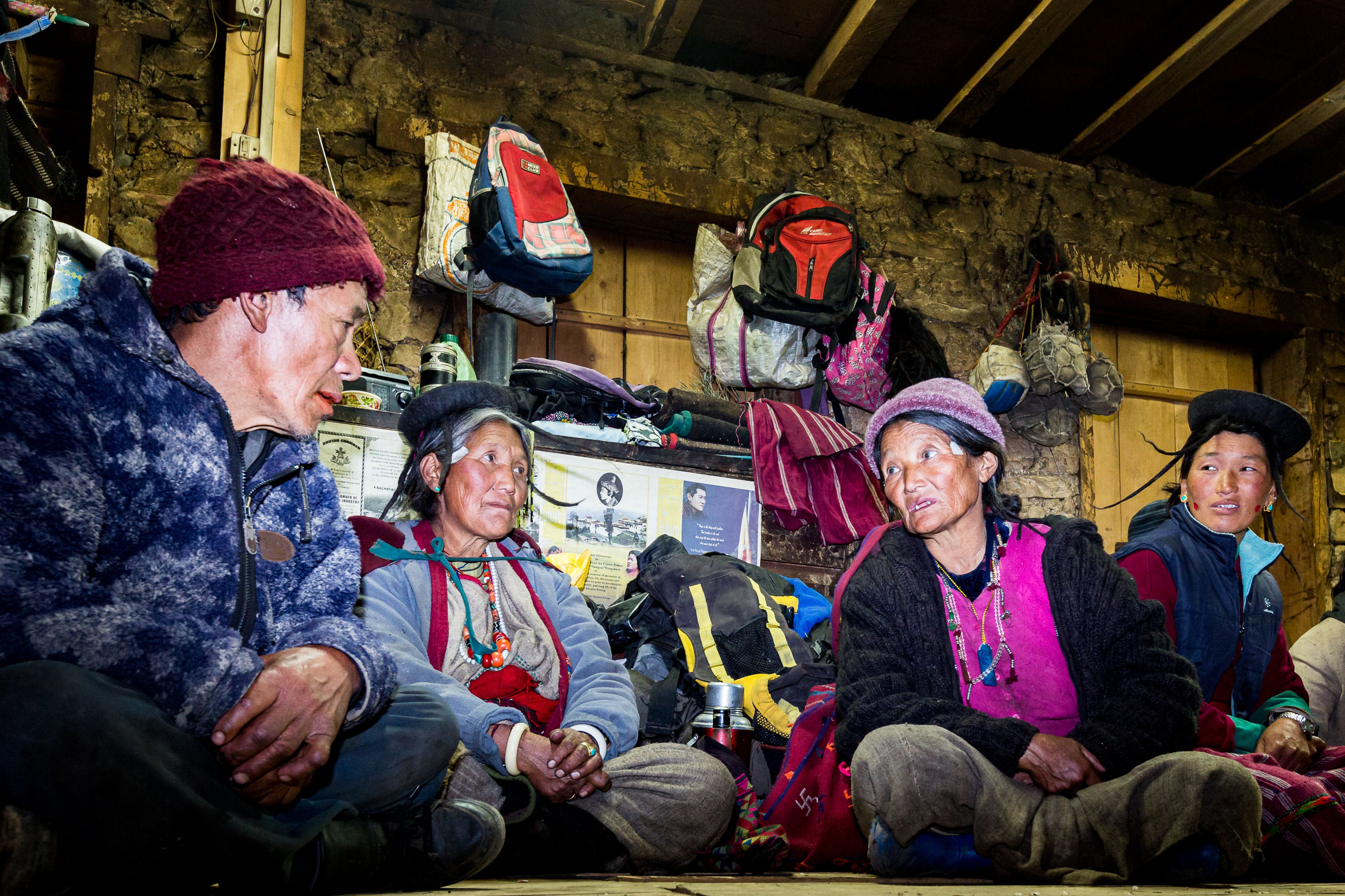
The Brokpas are a semi-nomadic yak-herding tribe, who are ethnically and culturally distinct from the Bhutanese. After spending the summer in the high alpine pastures with their herds, they return to their homes in Merak and Sakteng for the winters. Unlike the rest of Bhutan, which is Buddhist, the Brokpa are animists, and few speak Bhutan’s national language, Dzongkha.
With an overwhelming generosity of spirit, the village headman opened his home and his village to us for three remarkable days. We had arrived in the late afternoon and, as dinner was being prepared, villagers started thronging the headman’s home to meet us. To dissolve the multiple language barriers, Ju Shen whipped out her mobile phone and showed them our family photos. This was not only an instant hit, but created a bond like no other because, no matter where you are, families are important. When Ju Shen showed them our baby photos, the mothers cooed adoringly whilst the children laughed hysterically!
During our stay, the villagers proudly showed us their village. The gave us a special performance of their traditional summer yak dance, and showed us the new village community centre they were building themselves. Everywhere we went, we were offered endless cups of tea and a conveyor belt of snacks. The potent traditional fermented grain liquor, ara, was also offered but politely declined because it would have quickly debilitated ara novices like us!
Ju Shen ingeniously used her camera to connect to her subjects. The camera does more than capture images of the subjects; it also projects the photographer’s good faith, good intent, and goodwill to the subjects. Everywhere we went, she would show the villagers, on her camera’s screen, all the photos she had taken in their village. This brought much joy and quickly cemented the bonds built during our first dinner there. As we walked through the village, Jeevan would be comically bent over carrying the heavy camera pack, trudging several meters behind Ju Shen in abject servility. This made the women smile in solidarity with Ju Shen, whilst the men would nod in resignation with Jeevan!
Following our recommendation, Kesang Tshering and his company, Bhutan Wilderness Travel, were appointed to provide the logistics and guiding services for UWCSEA’s Grade 9 Outdoor Education expeditions to Bhutan. We have also both returned to provide some pro bono support for Bhutan: Ju Shen created a tourism promotion video titled ‘Flavours of Bhutan’, while Jeevan worked for a year with Druk Holding & Investments Bhutan’s sovereign wealth fund.

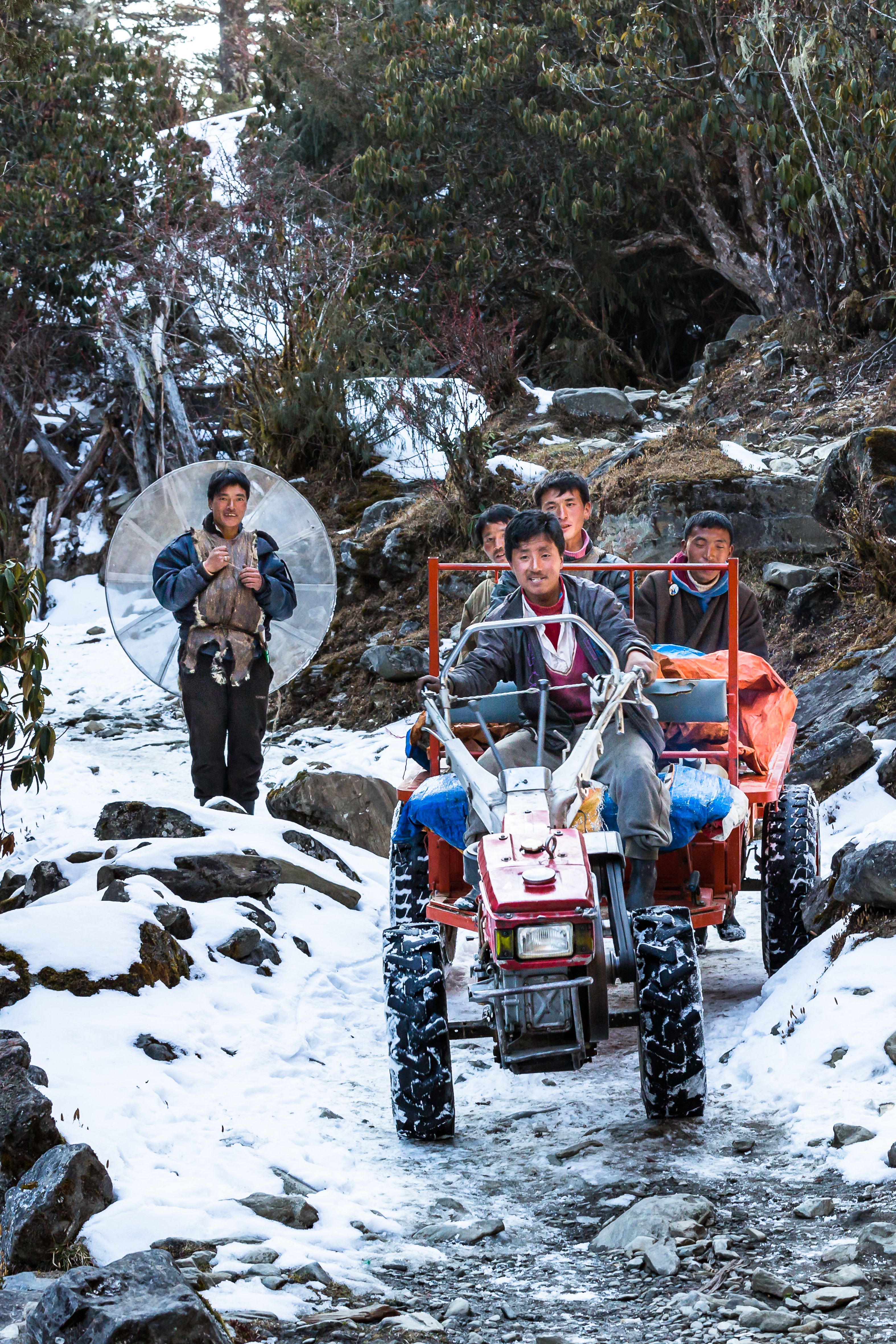

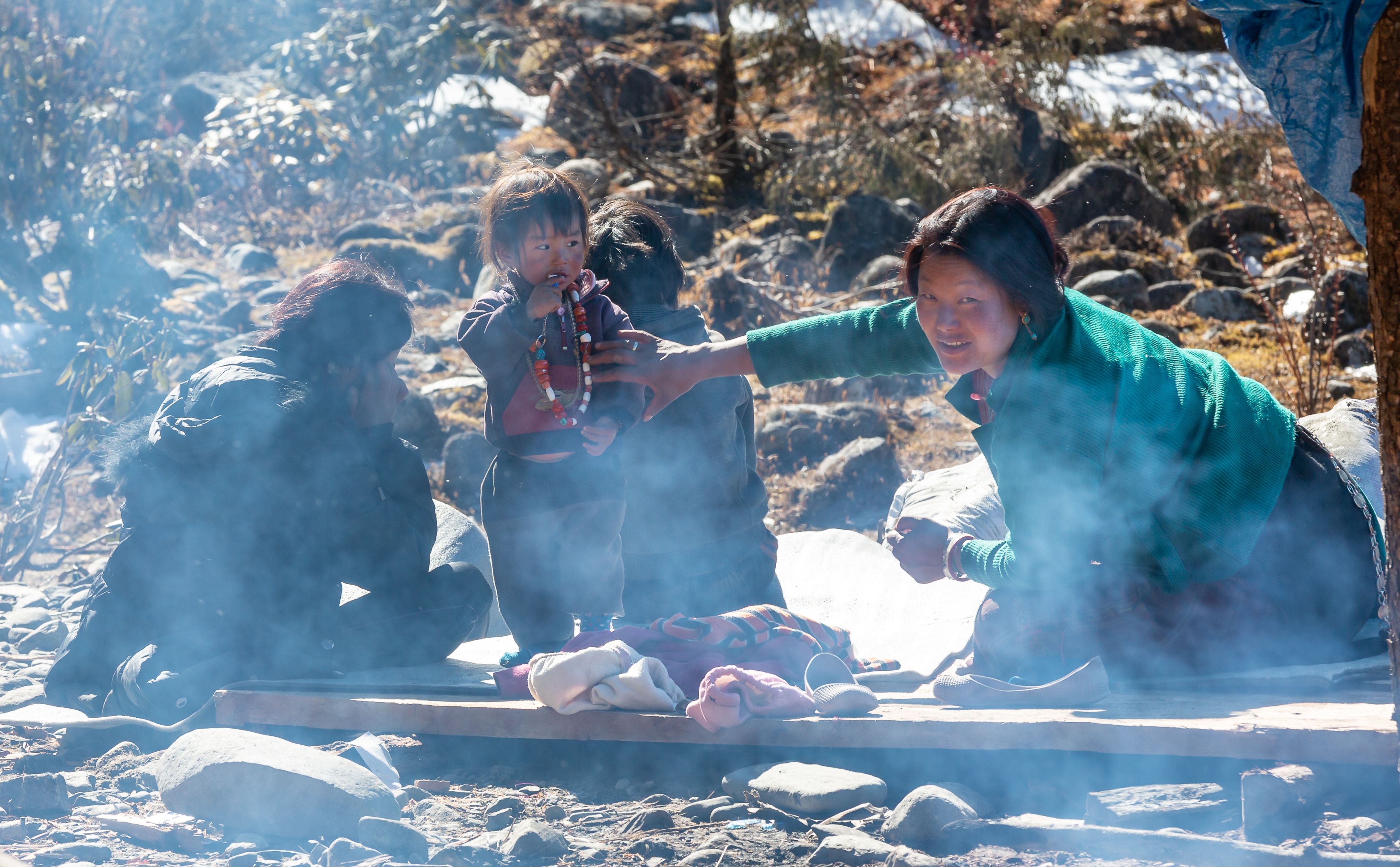
Our UWCSEA lessons and experiences have provided us with solid and sustainable foundations that continue to add fresh colour and vitality to our adventures in life. From our serendipitous encounters with the humble, hardworking Brokpa yak herders in Merak, the Hmong hill farmers in Phoumieng, the Intha fishermen and farmers in Nyaung Won, and the Lao monks in Luang Prabang, we learnt three important lessons. First: Whilst not everyone can be a hero to the world, everyone can be a hero to their family and community. Second: Whilst not everyone can be the best, everyone can be their best. Third: Whilst not everyone can donate money, everyone can donate their time to inspire and encourage others.
As UWCSEA alumni, you already know that this is simply all about learning from others, caring for others, and sharing with others. So, please join us to celebrate where our adventures in life all started: UWCSEA!
For ‘insider’ information on visiting these wonderful people, photographing these beautiful locations, excellent accommodation, and knowledgeable travel guides, please contact:
Travel Information:
Jeevan Sellappah
E: jeevan@sellappah.com
W: www.sellappah.com
Photography Information:
Ju Shen Lee
E: jushenlee@yahoo.com
W: www.jushenlee.com
Instagram: @jushenlee
 Built with Shorthand